
Most organisations don't fail audits because of a single major nonconformance. They fail because several small gaps — an overdue calibration, a training record nobody closed out, a corrective action left open since March — all surface in the same week the auditor is on site.
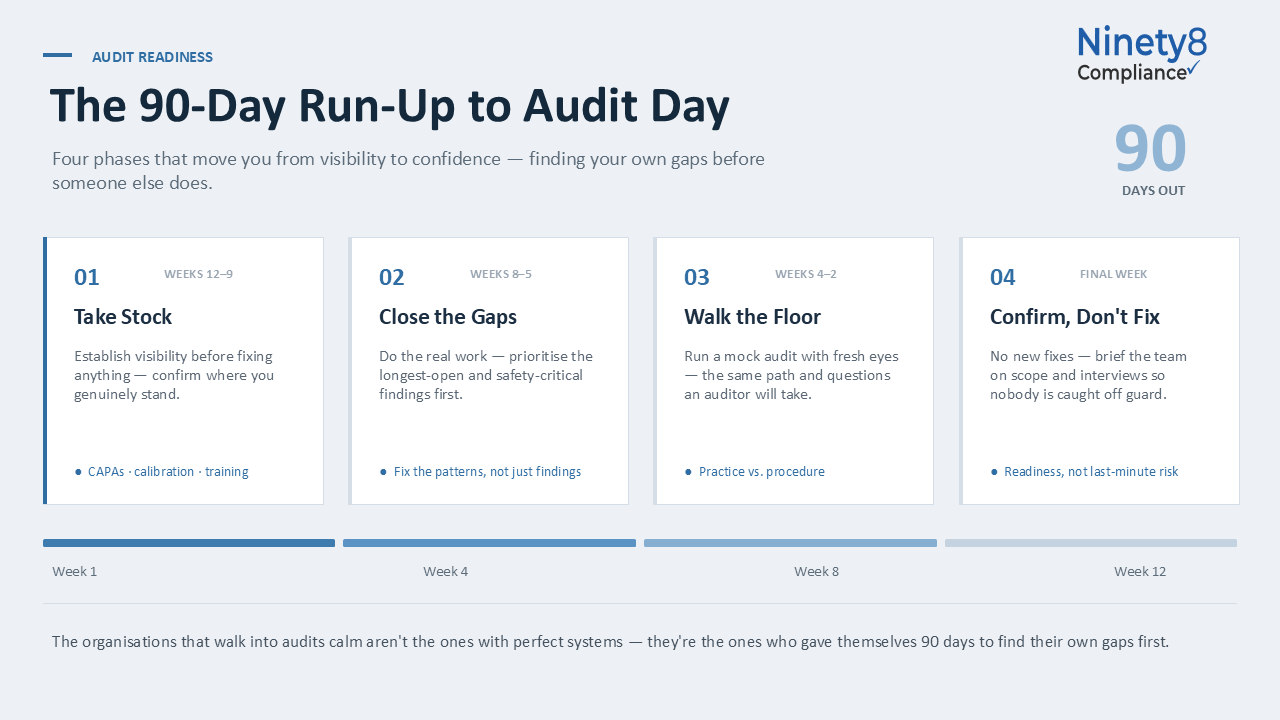
None of that is inevitable. Audit readiness is a discipline you build over time , not a scramble in the final few days. Here's the checklist we use with clients to make sure nothing gets missed in the twelve weeks prior to the audit.
Weeks 12–9: Take Stock
This phase is about visibility, not fixing anything yet. You're finding out exactly where you stand before you start closing gaps.
- Pull every open corrective and preventive action (CAPA) and confirm real owners and dates
- Check calibration and maintenance schedules against actual completion records
- Review training records against current job roles — not just the roles people had when they were hired
- Re-read your last audit report and confirm every finding was genuinely closed, not just marked closed
An audit doesn't test your paperwork. It tests practice Vs procedure, are you actually doing as its written.
Weeks 8–5: Close the Gaps
With visibility in place, this is where the real work happens. Prioritise anything that's been open longest or touches product safety and regulatory requirements first — auditors notice patterns, not just individual findings.
Weeks 4–2: Walk the Floor
Do a mock audit — ideally with someone who wasn't involved in the fixes, so they see it with fresh eyes. Walk the same path an auditor would and ask the same questions they'll ask.
- Can operators explain the process in their own words, not just point to a procedure?
- Do records at the workstation match what's in the system?
- Are nonconforming product and quarantine areas clearly controlled?
Final Week: Confirm, Don't Fix
By the final week, nothing new should be getting fixed — you're confirming readiness, not creating last-minute risk. Brief the team on who's likely to be interviewed and what the audit scope covers, so nobody is caught off guard by a question about a process they haven't touched in months.
The organisations that walk into audits calm aren't the ones with perfect systems. They're the ones who gave themselves 90 days to find their own gaps before someone else did.